Real stories, honest advice

7 Reasons Senior Dogs Slow Down — and the 2-Minute Dinner Ritual That Helps Rebuild What Age Takes

Published on 12 July 2026
7 Reasons Senior Dogs Slow Down — and the 2-Minute Dinner Ritual That Helps Rebuild What Age Takes

by the Kollavia team · Updated July 2026 · 6-minute read

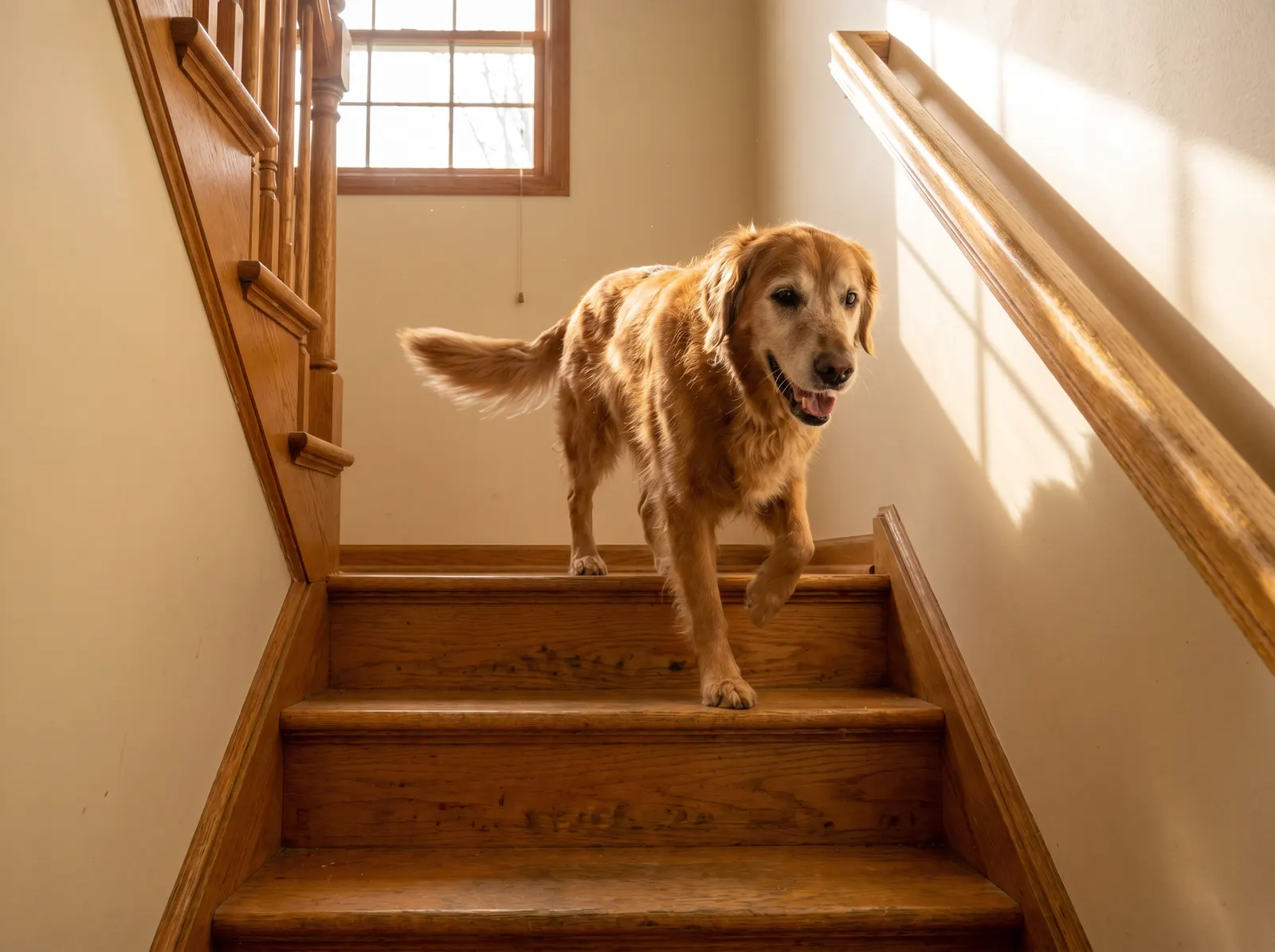
You noticed it at the stairs first. Most people do.

Not a limp, nothing dramatic — just a pause at the bottom step that didn't used to be there. Then the walks got a little shorter. The jump onto the couch became a decision instead of a reflex. And one evening you caught yourself thinking the thought every dog owner dreads: he's getting old.

Here's what nobody tells you at that moment: "getting old" isn't one thing. It's a handful of specific, physical changes — and while nothing stops a dog from aging (and anyone who says otherwise is selling you something), some of what age takes can genuinely be supported. Understanding what's actually happening is the difference between watching helplessly and doing something useful at dinner tonight.

Here are the seven reasons senior dogs slow down — and the simple ritual thousands of owners have added to dinner.

1. Their body makes less collagen every year

Collagen is the most abundant structural protein in your dog's body. It's the framework of cartilage, tendons, ligaments, skin and coat — the literal scaffolding they move on. And production naturally slows with age. The scaffolding doesn't get rebuilt as fast as it wears. Nothing is "wrong" — it's the same reason our own knees have opinions after forty. But it means an aging body is working with a shrinking supply of its most important building material.

2. Cartilage cushioning wears with normal use

Every step your dog has ever taken — every fetch, every zoomie, every leap off the porch that made your heart stop — compressed the cartilage that cushions the ends of their bones. Cartilage is built largely from collagen, and over a lifetime of normal, happy use, that cushion thins. This is where the occasional stiffness after a big day at the park comes from, and why the morning stretch takes a little longer at ten than it did at three.

3. Joint fluid gets thinner

Joints glide on synovial fluid — a natural lubricant whose key components include hyaluronic acid, a molecule your dog's body produces itself. With age, that fluid changes too. Less lubrication means less glide, and less glide means your dog starts thinking about movements that used to be automatic. That careful, calculating look before a jump? That's often this.

4. The slow-down spiral: move less, lose more

This is the one that sneaks up on owners. A dog who moves a little less loses a little muscle. A dog with less muscle finds movement a little harder — so they move less again. Left alone, the spiral tightens: the couch wins more evenings, the walks keep shrinking, and the slowdown accelerates faster than age alone would explain. The single best thing you can do for a senior dog is help them keep wanting to move — which is exactly why supporting their joints matters more with every birthday.


The 2-minute ritual, if you want to skip ahead: Kollavia is a liquid joint collagen for dogs — 400 mg hydrolyzed collagen I·II·III, 20 mg glucosamine and 10 mg hyaluronic acid per 2 ml serving, every amount printed on the label. Draw the dose, drizzle it over dinner, done. From about $1/day, with a 90-day keep-the-bottle guarantee. See the Open Label →


5. Bigger dogs carry a bigger load

Weight matters. A 70-pound dog's joints do dramatically more work per step than a 12-pound dog's, which is why bigger breeds tend to slow down earlier and more visibly. It's also why any serious joint supplement doses by weight — a Great-Dane-sized body on a Chihuahua-sized dose is a rounding error. (It's also why we print the honest math: a big dog on 4 ml a day goes through a 60 ml bottle in about two weeks. That's not a flaw, that's arithmetic — and it's why our 90-Day Rebuild Course exists.)

6. Half the battle is getting the supplement into the dog

Here's the industry's quiet secret: the most common outcome of buying joint chews is a drawer full of joint chews. Chews need binders, fillers and flavorings just to hold their shape — and picky dogs still eat around them, spit them behind the sofa, or accept them exactly four times before the suspicion sets in. Every refused chew is a dose that never happened, and with building-block ingredients like collagen, consistency is the entire game. A neutral liquid drizzled over dinner sidesteps the whole war: your dog eats dinner. That's it. That's the delivery system.

7. We wait too long to start supporting them

Most owners start thinking about joint support after the slowdown is impossible to ignore. It's human — the changes are gradual, and dogs are stoic. But the logic of building blocks is simple: support works best as maintenance, not as a rescue mission. The first hesitation at the stairs isn't a reason to panic. It's a reason to start.


The 2-minute dinner ritual

Here's the entire routine thousands of dog owners have added to their evenings:

  1. Draw the dose. The dropper is graduated; your dog's dose is set by weight — 1 ml a day under 15 lb, up to 4 ml a day over 60 lb. The chart's on the bottle and in the box.
  2. Drizzle it over dinner. Kollavia's profile is neutral. It disappears. Your dog notices dinner, not the supplement.
  3. Repeat every dinner. That's the whole secret. The coat changes usually show first (weeks 2–4), easier rises next (weeks 4–6), and the stairs-and-walks changes most owners are actually after arrive in weeks 6–12.

No pills. No wrestling. No chew negotiations. Two minutes, mostly spent opening the drawer.

And one more thing, because it's the reason Kollavia exists at all: every dose is disclosed. 400 mg hydrolyzed collagen types I·II·III, 20 mg glucosamine, 10 mg hyaluronic acid — per 2 ml serving, printed on the label. No "proprietary blend," no hidden numbers. In a category famous for labels that tell you nothing, we'd rather show you everything and let you decide.

The honest fine print, in large print: Kollavia is a supplement, not a medicine. It supports joint function and helps maintain mobility — it doesn't treat or cure anything, and it's not a substitute for your vet. If your dog is under treatment, talk to your vet first. And it isn't overnight: if you won't give it six weeks, save your money. That's also why the guarantee is 90 days: use it daily, and if your dog isn't moving easier by the end, email us — every penny back, and you keep the bottle.


The stairs aren't the end of the story. One bottle from $39.95 · The 90-Day Rebuild Course (3 bottles) at $29.95/bottle, ships free · 90-day keep-the-bottle guarantee Help them rebuild — start tonight →

These statements have not been evaluated by the Food and Drug Administration. This product is not intended to diagnose, treat, cure, or prevent any disease.

THIS IS SPONSORED CONTENT

This content is published by Kollavia. It may contain links to our products. We strive to provide accurate and useful information, but results may vary depending on individual situations.

DISCOVER THE SOLUTION
✔️ 90-Day Money-Back Guarantee